Should you run AI visibility work in-house? The hours, skills and tools it takes
Running AI visibility in-house: the five work streams, the skills each needs, the monthly hours, the tools to buy and when an outside provider is cheaper.
The short answer
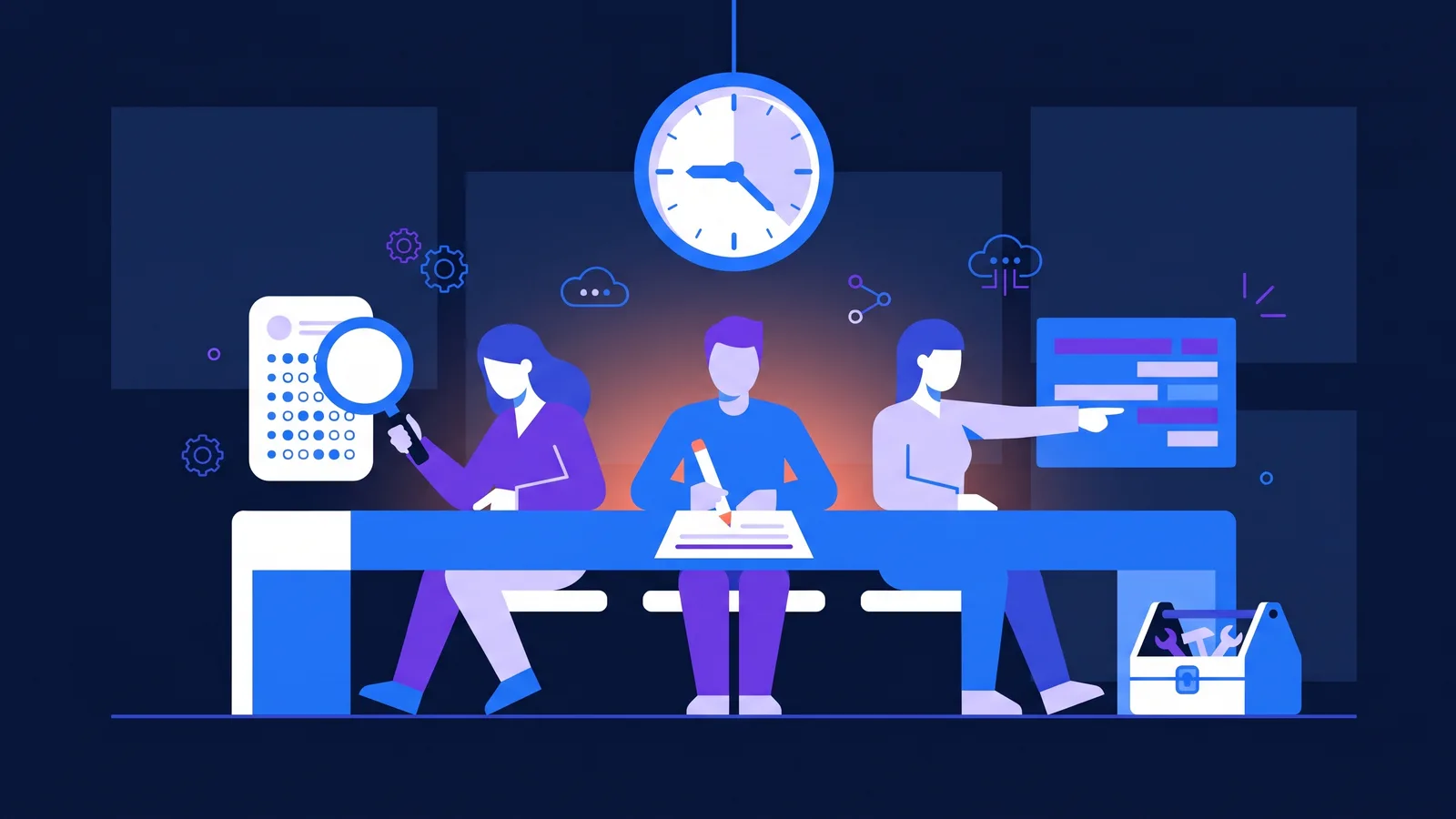
You can run AI visibility work in-house when you can staff five work streams: measurement, analysis, content, site fixes and off-site placements. Measurement runs on a tool subscription and a few hours a month. The other four need people with time, and off-site work needs relationships. Most firms keep measurement and content in-house and buy the rest.
Key takeaways
- AI visibility work splits into five streams, measurement, analysis, content, site fixes and off-site placements, and only measurement can run mostly on software.
- Across the 16 AI visibility tools with a US dollar monthly entry tier that we recorded on 5 and 6 October 2026, the median entry price was $79, so tooling is rarely what makes in-house work expensive.
- The same October 2026 records put the median monthly entry price of 13 listed agencies pricing in US dollars at $3,400; the gap between the two medians is mostly the cost of people.
- An in-house programme needs one named owner with protected hours, a frozen prompt set and a written method before any tool is bought.
- Off-site placements are the stream most firms buy in, because they depend on relationships with publishers, directories and reviewers that take months to build.
In this article
What does running AI visibility in-house actually involve?
Running AI visibility in-house means your own staff measure how AI answers describe your company, decide what to change, and make the changes. The work splits into five streams. Measurement and analysis tell you where you stand. Content, site fixes and off-site placements move the number. Each stream needs different skills and a different amount of time.
The question usually comes up at one of three moments. A first agency quote arrives and looks expensive. A retainer reaches renewal and the team feels it could do the work itself. Or a marketing lead has started checking answers by hand and wants to know what a proper programme would take. The answer is the same in each case: price the streams one by one, then decide which to keep.
Demand for outside help is real, which is one reason the in-house option deserves a fair look. In AgencyAnalytics' 2026 benchmarks survey of 494 agency professionals, 64% of them in the US, fielded February–April 2026, 66% reported increased client demand for AI search services.1 AgencyAnalytics sells reporting software to agencies. Busy agencies are not always cheap ones, and some of the work they sell is work your team may already do.
Prior work and a disclosure
Sigzen AI sells AI visibility programmes at published prices, so we gain when firms buy rather than build.2 Read the estimates with that interest in mind. Our guide to what GEO costs compared agency, tool and in-house options at the level of price. Our one-hour self-check covers a single manual pass. This guide covers the step between them: staffing the work month after month.
The five work streams, and which ones software can carry
Only measurement can run mostly on software. A tool sends the same prompts to each engine on a schedule, stores the answers and counts how often you are named or cited. Someone still has to choose the prompts, read the answers and check that the tool counted correctly, but the repetitive part is automated.
Analysis is reading. It means opening the answers where a rival was named and you were not, finding the sources the engine leaned on, and writing down why you lost. It needs someone who knows your market well enough to tell a wrong answer from an unfamiliar one.
Content is writing pages that answer buyer questions plainly, with facts an engine can lift. Site fixes are technical: crawl access, page speed, structured data, and making sure key facts sit in server-rendered HTML. Off-site placements mean getting your company described accurately on the third-party pages engines cite, such as directories, review sites, trade press and comparison articles.
Which streams software carries, and which need people
Mostly software
- Measurement: scheduled prompts, stored answers, counts
- Alerts when a count moves
People with market knowledge
- Analysis: why a rival was named instead
- Content: pages that answer buyer questions
People with specialist access
- Site fixes: developer time on templates
- Off-site: publisher and directory relationships
What does the tooling cost?
Tooling is the cheapest line in an in-house budget. In the published prices we recorded on 5 and 6 October 2026, the 16 AI visibility tools with a monthly entry tier in US dollars had a median entry price of $79, ranging from $19 to $800.3 Higher tiers mostly add tracked prompts, engines and countries rather than different features.
The category is crowded, so you have choices. G2 listed more than 150 products in its answer engine optimisation category by January 2026, up from 7 in March 2025.4 That growth means prices are competitive. It also means many products are young, and their methods are worth checking before you trust their numbers.
Before you buy, write down what the tool must do. It should run a prompt set you control, on the engines your buyers use, in the countries you sell to. It should store the raw answers and let you export them. Our measurement spec lists the questions to put to any vendor, and it applies as much to a tool as to an agency.
Published prices, October 2026
Tools are cheap; people are not
How many hours a month should you plan for?
Plan in hours per stream, not in headcount. A firm selling in one country with a focused prompt set needs far less time than one selling in several languages. The estimate below assumes one country, one language, a prompt set of a few dozen buyer questions and five engines. Change those assumptions and the hours change with them.
Measurement takes the least. Once the prompt set is fixed and the tool is set up, someone needs a few hours a month to check the counts, spot-read answers and log any change to the method. Analysis takes more, because every lost prompt needs reading. Content and site fixes take the most, and they come in bursts around new pages and template changes.
Off-site work is the hardest to estimate. A single directory listing can take an afternoon. A correction on a trade site can take weeks of emails. Most of the time goes on waiting, so the hours are low and the elapsed time is long.
Hours a month by stream: one country, one language
Added together, that illustrative plan comes to roughly 50 to 75 hours a month, or between a third and a half of one full-time role. Our view: if nobody can be given that time in writing, the in-house option will stall in its third month, when the novelty has gone and the content backlog has grown.
Which skills does each stream need?
Each stream needs a different person, but most firms already employ some of them. The gap is rarely talent. It is time, and a clear owner who decides what gets done each month.
Measurement needs someone careful with method. They must keep the prompt set stable, run it the same way each time and record every change. An analyst or a search specialist usually fits. Analysis needs market knowledge: a product marketer or a senior salesperson can tell why a buyer would pick the rival the engine named.
Content needs a writer who can state facts plainly and source them. Long brand essays are the wrong skill here. The pages that get quoted answer one question in their first paragraph and carry specific, checkable detail. Our section-by-section rewrite guide shows the pattern.
Site fixes need a developer with access to templates, not just a content editor. Off-site work needs someone who already talks to the publishers, directories and associations in your sector. That is often PR or partnerships, and it is the skill most often missing.
Write each person's share of the work into their objectives for the year. AI visibility tasks that sit outside anyone's objectives get done when there is spare time, and in most marketing teams there is none. The owner should report the hours spent each month beside the results, so the cost of the in-house option stays visible.
- Programme owner
- The one person accountable for the prompt set, the method and the monthly plan. They need not do every stream, but they decide what each stream does next.
Why measurement is the stream to get right first
Every other stream is judged against the measurement, so a sloppy method makes the whole programme unreadable. An in-house team has one advantage here: nobody is selling it a number. It also has one risk: nobody is checking its method either.
Engines vary from run to run, and the variation is larger than many teams expect. MaxAEO, which sells AI visibility measurement, published guidance treating repeat runs of one prompt as clustered: they resemble each other, so each extra repeat adds less information than a new prompt would.5 A wider prompt set, run on separate days, gives a steadier number than many runs of a few prompts.
Engines also change underneath you. OpenAI moved paid ChatGPT plans to GPT-6 Sol from 7 October 2026 and Free and Go users to GPT-6 Luna from 8 October.6 A change like that can move every brand in a category in the same week. Log model releases beside your monthly numbers, so a jump is not mistaken for the result of your own work.
How often an engine searches the web matters too. Ahrefs, which sells SEO and AI visibility tools, studied 66.6 million free, logged-out ChatGPT responses from August and September 2026, across all countries, and 14.4% triggered a web search.7 Your content and off-site work reach the searched answers first. The rest reflect what the model already learned, which changes slowly. Our guide to how often to rerun checks covers the schedule.
Where should the in-house effort go first?
Put the first hours into your own site, because that is where engines look most when a buyer names you. Profound, which sells AI visibility tools, analysed 11.84 billion citations across eight engines from 16 April to 16 July 2026 and found that about 57% went to company-owned sites.8 Your site is the source you control completely.
Engines also differ in how many sources they draw on. Semrush, which sells an AI visibility toolkit, analysed 126 million US prompts from January to April 2026 and found that ChatGPT cited about 15 sources per response, against about 3 for Gemini.9 On an engine with few slots, the third-party pages you cannot edit carry more weight. That is where off-site work starts to pay.
So a sensible order is site first, content second and off-site third. Fix crawl access and the facts on your key pages. Then write the answer pages your prompt set shows you are missing. Then go after the directories, reviews and articles the engines cite for your category. Our view: a team that starts with off-site outreach before its own pages are clean spends weeks earning links to pages that do not answer the question.
What does in-house cost compared with an agency?
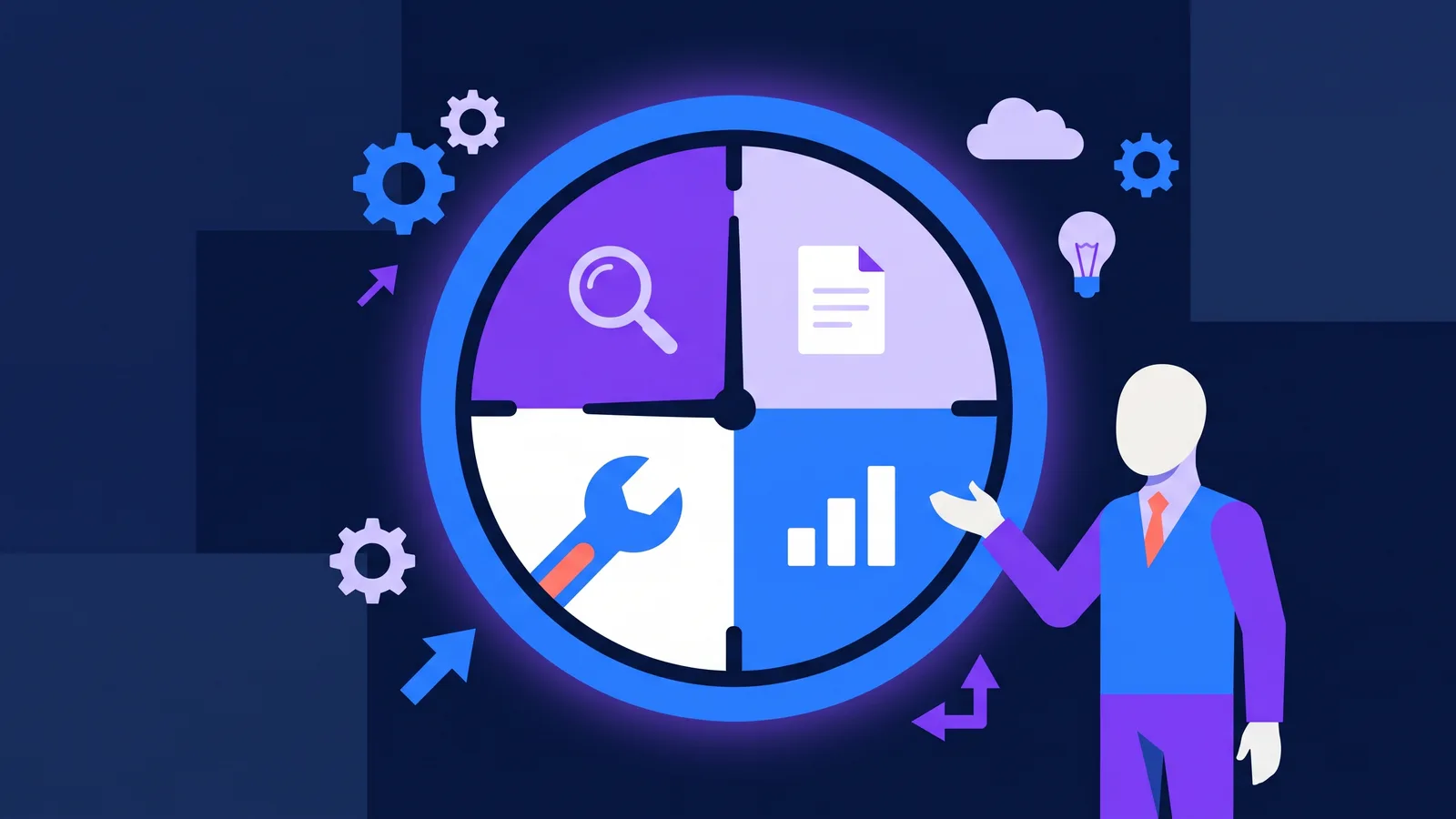
The fair comparison is the hours, priced at your own staff costs, plus the tool, against an agency's fee for the same scope. Across the 13 listed agencies pricing in US dollars that we recorded on 5 and 6 October 2026, the median monthly entry price was $3,400.3 Set that against the tool median of $79 and the difference is mostly the cost of people.
To make the comparison honest, price your hours at the loaded cost of the people who would do them, including the work they would stop doing. Then compare scope line by line. An agency entry tier may cover measurement and content but leave site fixes and off-site placements to you, or bill them separately.
Clicks alone rarely justify either option yet. In SE Ranking's study of 101,574 websites in 250 countries, AI search sent 0.32% of all visits in January–April 2026.10 The case rests on influence. In G2's survey of 1,076 B2B decision makers in North America, EMEA and APAC (March 2026), 51% said they start software research in an AI chatbot more often than in Google.11 Our business case guide works through the numbers.
| Stream | In-house fits when | Buy in when |
|---|---|---|
| Measurement | You can freeze a prompt set and run it monthly | You need many countries or languages |
| Analysis | Product marketing has a few hours each month | Nobody reads the lost answers |
| Content | You have a writer who works from sources | The backlog keeps growing |
| Site fixes | A developer can change templates | Your site is run by a third party |
| Off-site | PR already knows your sector's publishers | You have no press or directory contacts |
Illustrative. Rules of thumb from the Sigzen AI editorial team.
The hybrid most firms end up with
Most firms keep measurement and content in-house and buy off-site work and a periodic method check. That split keeps the knowledge of the market inside the company and buys the relationships and outside view that are slow to build.
A hybrid needs clear lines. Write down which prompt set is the official one, who runs it, and where the raw answers are stored. If an outside provider also measures, insist that both use the same prompts, engines and countries, or the two reports will disagree. Our renewal review guide covers what to keep in writing if the provider changes.
Decide in advance how the two sides talk. A short monthly meeting with one shared document works better than separate reports. The document lists the prompts lost that month, the reason for each, and who acts on it: your writer, your developer or the provider's outreach team. Each action carries a date and an owner. When the next run comes in, the same document shows whether the action moved the answer. That single record is also what a renewal review needs, so keeping it costs nothing extra.
Ownership matters most in a hybrid. The prompt set, the raw answers and the published assets should belong to you, whoever does the work. Our view: a hybrid is only cheaper than full outsourcing if you could swap the outside provider without losing your history.
When is an outside provider the cheaper choice?
An outside provider is usually cheaper when the work spans several countries or languages, when nobody inside can take on the hours, or when off-site work matters most in your category. Each of those multiplies the time a single in-house owner would need.
Several markets are the clearest case. Each country needs its own prompts in its own language and its own set of local sources to pursue. A provider who already runs those markets spreads the cost of tools, method and contacts across clients. An in-house team pays it alone.
Speed is another. A team starting from nothing spends its first quarter building a prompt set, choosing a tool and learning to read answers. If a launch or a renewal date is close, that learning period can cost more than a few months of outside fees. A short audit is a middle path: someone else sets the baseline and the method, and your team takes it from there.
The first 90 days of an in-house programme
Name the owner, agree protected hours, write the method: prompts, engines, countries, run schedule.
Choose a tool against the written spec; run the baseline; store the raw answers.
Read every lost prompt; fix crawl access and facts on key pages; plan the first answer pages.
Publish the first pages; list the third-party sources engines cite; decide which streams to buy in.
A decision you can make in a week
List the five streams, write the hours your team could give each one, and name who would do them. Price those hours at loaded cost and add a tool. Then ask one agency and one tool vendor to quote for the streams you left blank. Compare scope line by line, not total against total.
If you cannot name an owner with protected hours, buy the programme and keep the prompt set and raw answers in your name. If you can, start with measurement and your own site, and buy the streams that need contacts you do not have.
Our view: the right split changes as the team learns. Many firms that start fully outsourced bring measurement in-house within a year, and many that start in-house buy off-site work once their own pages are clean. Revisit the split at each renewal, with the hours log in hand.
Sources
- AgencyAnalytics, 2026 Marketing Agency Benchmarks Report: 494 agency professionals, 64% in the US, Feb–Apr 2026 (Jun 2026)
- Sigzen AI, published prices (Nov 2026)
- Sigzen AI, published GEO prices: 34 of 41 agencies listed and 25 tools, seen 5–6 Oct 2026 (Oct 2026)
- G2, growth of the AEO software category: products listed on G2, Mar 2025–Jan 2026 (Jan 2026)
- MaxAEO, AI visibility sample size and clustered runs (Jul 2026)
- OpenAI, ChatGPT release notes: GPT-6 Sol for paid tiers from 7 Oct 2026 and GPT-6 Luna for Free and Go from 8 Oct 2026 (Oct 2026)
- Ahrefs, ChatGPT query fan-out study: 66.6M free, logged-out GPT-5.6 Luna responses, Aug–Sep 2026, all countries; factual subset 20,000 US prompts; citation ranks US, Mar–Sep 2026 (Oct 2026)
- Profound, where AI citations come from: 11.84B citations, 8 engines, 16 Apr–16 Jul 2026 (Jul 2026)
- Semrush, 2026 AI Visibility Index: 126M US prompts, Jan–Apr 2026 (Jun 2026)
- SE Ranking, AI traffic study: 101,574 websites, 250 countries, Jan–Apr 2026 (Jun 2026)
- G2, 2026 AI Search Insight Report: 1,076 B2B decision makers, North America, EMEA and APAC, Mar 2026