AI answers quote your research but cite another site. How do you get the citation back?
A method for original research that AI answers repeat under another site's name: find who gets the citation, then publish data engines can credit to you.
The short answer
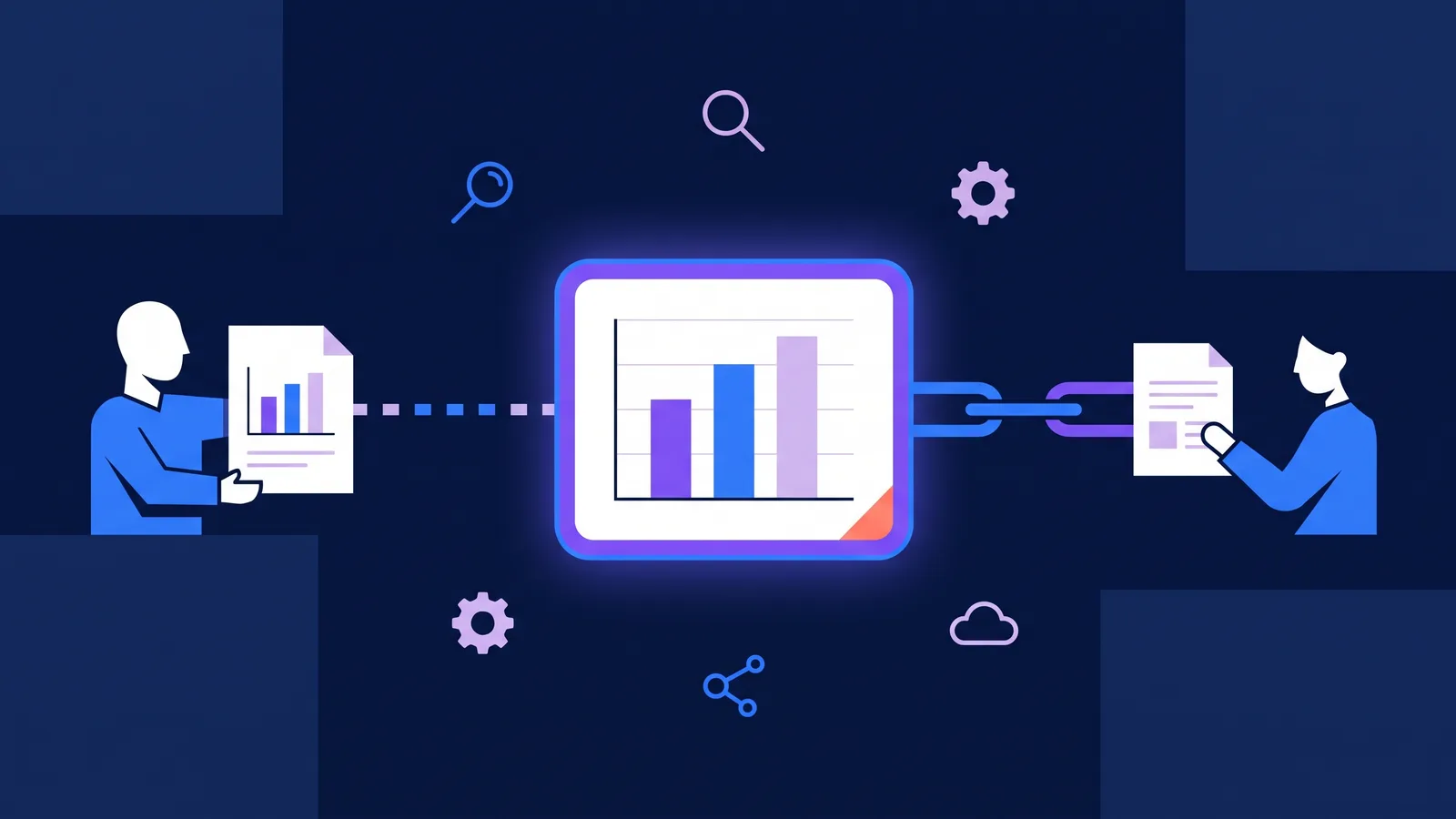
When AI answers quote your original research but cite another site, publish each finding on one dated page of its own, in plain sentences that name your company, the sample and the period. Ask re-publishers to link that page, then re-run the prompts that use your figures and count who gets the citation.
Key takeaways
- AI answers credit the page they read, and that is often a news story, a roundup or a vendor blog that repeated your figure, not your own report.
- Ahrefs found that 14.4% of 66.6 million free, logged-out ChatGPT responses in August and September 2026 triggered a web search, so most answers in that sample carried no live citation at all.
- Profound counted 11.84 billion citations on eight engines from April to July 2026 and found about 57% pointed to company-owned websites, so a findings page on your own site can win the citation.
- The fix is a findings page per headline figure: a sentence that names you, the sample, the period and the geography, in the server HTML, at a stable URL that never moves.
- Our view: measure attribution share, the share of answers using your figure that cite your own page, because a mention without the citation does little for you.
In this article
Why do AI answers cite someone else for your research?
AI answers cite someone else for your research because an engine credits the page it read, not the company that did the work. If a trade publication, a roundup or a competitor's blog repeated your figure, and that page was easier to find or to quote, it gets the link. Your name may still appear in the sentence, or it may disappear.
This happens most to companies that publish a survey, a benchmark or an index once a year. The report goes out as a PDF or a gated download, a press release gives the headline figure, and dozens of articles repeat it. Each article is a plain web page with the figure in its first paragraph. Your own copy sits behind a form or inside a file.
Engines that search pick from what they can read quickly. When the original is hard to reach, the copy wins by default. The engine is not wrong to cite a source that states the figure. It simply cannot see that the source was second-hand.
How your figure ends up credited to another site
- You publish the report
- Press and blogs repeat the figure
- Your own page is gated or a PDF
- Engine searches and reads the copies
- Answer cites the copy
Prior work, and what this method adds
Citation errors in AI answers are well studied for news, and press teams have long asked outlets to link the original study. Our notes on rewriting a page so AI answers quote it and on what the AI accuracy studies measured cover nearby ground. This piece adds the case of your own research: how to find who gets your citation and how to move it back.
A disclosure first. Sigzen AI sells AI visibility audits and sprints at published prices, so weigh our view with that in mind. Several studies cited here come from companies that sell tools in this category.
What losing the citation costs you
Losing the citation costs you the reason you published the research. A survey is meant to make your company the source people quote when the topic comes up. When an answer gives the figure and links someone else, the buyer who wants to know more lands on that site, and the authority you paid for goes with them.
- Named, not linked. The answer says "according to a survey by Tailspin" but links a news article. You get the mention and lose the visit.
- Linked to a rival. The answer cites a competitor's blog post that quoted your figure, so a buyer reads your data on their site, next to their offer.
- Credited to the wrong source. The answer attributes your figure to the publication that repeated it, and your name is gone.
The third is the worst, because it rewrites the record. Once an answer says a trade magazine found your result, other writers who use AI to research will repeat that attribution.
Buyers notice when answers are unreliable, even if they cannot tell why. In G2's survey of 1,076 B2B decision makers in North America, EMEA and APAC in March 2026, 64% said they encounter inaccurate AI recommendations often or very often.5 A wrong attribution is one of those errors, and it is one you can fix.
Our view: if a figure of yours is quoted in AI answers at all, it is worth fixing the citation. The demand already exists. You are only changing where it leads.
How often do AI answers carry a citation at all?
AI answers carry a citation less often than most teams assume, and only searched answers can credit a current page. An answer written from the model's memory names a source, if at all, from what it learned in training. You can change that only slowly. Searched answers are where the citation is decided this month.
Ahrefs, which sells SEO and AI visibility tools, tracked 66.6 million free, logged-out ChatGPT responses in August and September 2026 and found that 14.4% triggered a web search.1 Similarweb, which sells web traffic data, found the share of US ChatGPT prompts whose answer carried a citation rose from about 1.6% in June 2025 to about 6.8% in May 2026.2 The two measure different things, but both say the same: most answers carry no live link.
Citations in 2026
Where an answer's link can come from
When answers do cite, company sites do well. Profound, which sells an AI visibility platform, counted 11.84 billion citations on eight engines from 16 April to 16 July 2026, and about 57% pointed to company-owned websites.3 Your own site can win the link for your own figure, if it offers a page an engine can quote.
Engines differ in how many sources they read. Semrush's 2026 AI Visibility Index, built on 126 million US prompts from January to April 2026, found ChatGPT cited about 15 sources per response against about 3 for Gemini.4 An engine that reads three sources gives the copies fewer chances to crowd you out, but it also gives your page fewer chances to be among them.
How do you find out who gets your citation?
You find out who gets your citation by writing prompts that would use your figures, running them across engines several times, and recording every link each answer cites. The output is a table: figure, prompt, engine, the source named in the text and the page linked. Two afternoons are usually enough for a first pass.
Start with the figures, not the report. List the three to five findings people actually quote, which you can find by searching for the exact figure in quotes. For each one, write prompts a buyer or a journalist would type: the plain question the figure answers, the question with your industry and country, and a question that asks for a source.
An attribution test for your own research
- List the quoted figures
The three to five findings that appear most often in other people's articles.
- Write three prompts per figure
The plain question, the question with industry and country, and one that asks for the source.
- Run each several times
On ChatGPT, Gemini, Copilot, Google AI Overviews and AI Mode, logged out where possible.
- Record name and link
Who the answer says found it, and which page it links, for every run.
- Count attribution share
Answers that use your figure and link your page, divided by all answers that use it.
Run each prompt more than once, because engines sample their answers and the cited pages change between runs. Our note on building a prompt set from real buyer questions covers how to word prompts so they match what people ask.
Mark each answer as one of four outcomes: credited and linked to you, named but linked elsewhere, credited to another source, or figure used with no source at all. Answers in the last group usually come from memory. The middle two groups are your work list, sorted by which pages they link.
Why the copy beats the original
The copy beats the original because it is easier to read, easier to quote and often easier to find. Each of those is something you control on your own page. None of them depends on the authority of the site that repeated your figure.
AI search tools have a documented habit of citing copies. In a study published in March 2025, now dated, with its test period not stated, the Tow Center at the Columbia Journalism Review tested eight AI search tools on 1,600 queries built from news excerpts. In that test, whose period was not stated, the tools gave incorrect answers to more than 60% of them.6 The authors also reported, test period again not stated, that the tools often cited the wrong article and pointed to syndicated copies on aggregator sites rather than the original publisher.6
That test was about news, and its task was hard on purpose. The pattern still carries over to research. When several pages state the same figure, an engine has no reliable way to tell which one did the work, so it picks the one that reads best.
The usual reasons your page loses
| What the original does | What the copy does instead |
|---|---|
| Figure inside a PDF or behind a form | Figure in the first paragraph of a web page |
| Chart image with the number in it | The number written as a sentence |
| Report page moves each year | Article URL stays put |
| Headline figure without its sample | One quotable line with the context |
| Launch page talks about the report | Article answers the question directly |
Illustrative: common patterns, not a measured ranking.
Google's guidance for its AI features asks site owners to keep important content in textual form and to make sure it is available to crawlers.9 A figure that lives only in an image or a gated file fails both tests. The article that copied it passes them.
Our view: the gated PDF is the most common cause of a lost citation, and it is a choice, not a constraint. You can keep the full report behind a form and still publish every headline finding as open text.
Step 1: publish a findings page for each headline figure
Start with one open web page per headline finding, at a URL that will not change. The page should answer the question the figure answers, in its first sentence, and name your company as the source. That gives an engine a page it can quote without a detour through someone else's article.
Write the key sentence so it can be lifted whole. It should name who ran the research, how many took part, where, when and what they found. An engine that quotes that sentence carries your name with it.
What each findings page needs
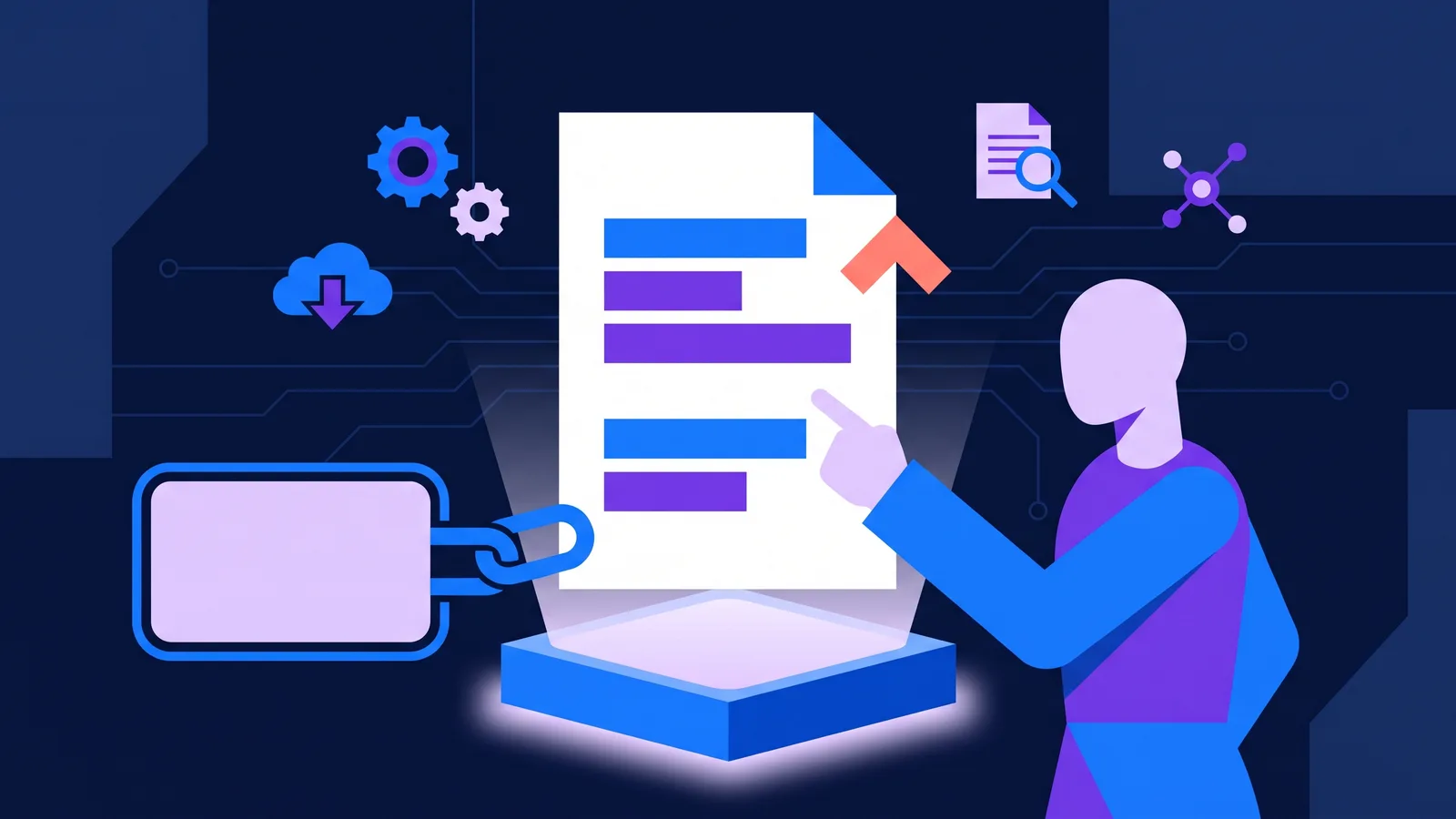
- The figure as a sentence in the first paragraph, with your company, the sample, the period and the geography.
- A short method section: who was asked, how they were found, when and how many responded.
- A publication date and a "last checked" date, both visible.
- A suggested citation line that people can copy, with the page's own URL.
- A link to the full report, which can stay gated if you need the leads.
Lab work supports making figures explicit. In a 2024 study, now dated, Aggarwal and colleagues found that adding citations, quotations and statistics to source pages were the best-performing methods, with relative gains of 30–40% on one of their visibility metrics.7 That was a lab setting, not a live engine, so treat it as direction rather than a forecast.
Add Dataset markup if you like. Schema.org's Dataset type has properties for the creator, the date published, the measured variables, the spatial and temporal coverage and the licence.10 Be honest about what markup does, though. Ahrefs added JSON-LD schema to 1,885 already heavily cited pages between August 2025 and March 2026 and found no reliable lift in citations.8 The sentence on the page does the work.
Step 2: make it easy for re-publishers to link you
Next, make linking to your findings page the easiest thing a writer can do. Most journalists and bloggers who repeat a figure would link the original if they had a clean URL. When the only link on offer is a press release or a form, they link whatever they found.
Put the findings page URL, not the download page, in every press release, pitch and social post. Give writers the exact sentence and the citation line. If you license the data, an attribution licence such as Creative Commons Attribution 4.0 lets others reuse it on the condition that they give credit and a link where reasonable.11
Two ways to launch the same research
Report-first launch
- Press release links a gated download
- Headline figure only in a chart
- New URL for each year's edition
- Writers link whatever they found
Findings-first launch
- One open page per headline figure
- Figure written as a quotable sentence
- Stable URL, updated each edition
- Citation line ready to copy
Ask for links on the pages engines already cite
Your attribution test has already told you which pages get your citation. Go through them, most frequent first. Where an article quotes your figure without a link, write to the author or editor with the findings page URL and ask for the link to be added. Keep the request short and factual. Many publications correct a missing source when asked.
Our view: ask for the link, not for the copy to come down. A page that repeats your figure and links you passes authority to your findings page. A deleted page passes nothing.
Should you stop gating your research?
You should stop gating the findings, not necessarily the report. The headline figures, the method and the sample need to be on an open page for engines to credit you. The full report, the tables by segment and the commentary can stay behind a form if leads from it matter to your sales team.
Think about what the gate actually protects. A press release already gives the headline figure to anyone who wants it, and every article that repeats it is open. Gating the original only means that the open version engines read belongs to someone else.
Retire nothing without a redirect. If an old report page must move, send it to the findings page with a permanent redirect. Our note on keeping AI citations through a redesign covers the redirect checks in detail.
How do you know the citation has come back?
You know the citation has come back when attribution share rises on the same prompts, run the same way, over two or three months. Compare like with like: the same figures, the same prompts, the same engines and the same number of runs. A single answer that links you proves little.
Expect searched answers to move first. Engines that search can find a new findings page within weeks, especially once a few articles link it. Answers from memory change only when the model is replaced, so the old attribution can linger there after the sources are fixed.
Track the four outcomes from your baseline separately. A rise in "credited and linked" is the goal. A fall in "credited to another source" shows the record is being corrected. A steady share of "no source" answers is normal, and it tells you how much of the topic still runs on memory.
Winning back a research citation over one quarter
List the quoted figures and run the baseline attribution test.
Publish a findings page for each figure, with method and citation line.
Ask the most-cited articles for a link; update press materials.
Re-run the same prompts and compare attribution share by engine.
Re-run again; plan the next edition on the same URLs.
What to do this month
This month, run the attribution test on your most-quoted figures and publish a findings page for the one that loses its citation most often. That puts the cheapest change on the figure with the most demand. Leave the outreach and the rest of the figures for the following weeks.
- Search for your three to five most-quoted figures and list the pages that repeat them.
- Write three prompts per figure and run each on all five engines, several times.
- Record the named source and the linked page for every answer; work out attribution share.
- Publish one findings page, with the figure as a sentence, the method and a citation line.
- Write to the authors of the two or three articles cited most often and ask for a link.
- Book the re-test for eight weeks out, with the same prompts and the same number of runs.
Research is one of the few things that can make your company the source an answer names. It only works if the answer can find the original. Plan the next edition around the findings pages, not the PDF, and the citation has somewhere to land.
Sources
- Ahrefs, ChatGPT query fan-out study: 66.6M free, logged-out GPT-5.6 Luna responses, Aug–Sep 2026, all countries; factual subset 20,000 US prompts; citation ranks US, Mar–Sep 2026 (Oct 2026)
- Similarweb, AI search stats 2026: ChatGPT answers with a citation, US, Jun 2025–May 2026 (Jul 2026)
- Profound, where AI citations come from: 11.84B citations, 8 engines, 16 Apr–16 Jul 2026 (Jul 2026)
- Semrush, 2026 AI Visibility Index: 126M US prompts, Jan–Apr 2026 (Jun 2026)
- G2, 2026 AI Search Insight Report: 1,076 B2B decision makers, North America, EMEA and APAC, Mar 2026
- Columbia Journalism Review, Tow Center: eight AI search tools, 1,600 citation queries (Mar 2025); test period not stated(dated)
- Aggarwal et al., GEO: Generative Engine Optimization, KDD 2024(dated)
- Ahrefs, schema and AI citations test: 1,885 already heavily cited pages, Aug 2025–Mar 2026 (May 2026)
- Google Search Central, AI features and your website (updated Dec 2025)
- Schema.org, Dataset type
- Creative Commons, Attribution 4.0 International licence deed