Can you run an AI order-status agent on WhatsApp in 2026? The rules after January's policy change
WhatsApp's January terms barred general-purpose AI assistants, never a business's own service bot. How to scope a where-is-my-order agent that fits.
The short answer
Yes. WhatsApp's January 2026 terms targeted general-purpose AI assistants, and an EU order in June is reopening access for them. A business using AI for its own customer service was never barred. An order-status agent that answers from your own order data, with a route to a person and an easy opt-out, is on safe ground.
Key takeaways
- From 15 January 2026, WhatsApp's Business API terms barred AI providers whose main product is a general-purpose assistant.
- Businesses using AI for their own customer service, such as an order-status bot, remain allowed under the change.
- Keep the agent narrow: answer from your own order data, about your own orders, and refuse open-ended chat.
- Build escalation to a person and a clear opt-out into the first version, not a later release.
- On 9 June 2026 the European Commission ordered Meta to restore free access for rival AI assistants while it investigates, so the general-purpose rules are still moving.
In this article
What changed on WhatsApp in January?
Meta changed the WhatsApp Business API terms so that general-purpose AI assistants could no longer be distributed through it. TechCrunch reported in October 2025 that the change would take effect on 15 January 2026, and it did.1 It bars AI providers from using the API when the AI technology is the primary functionality being offered.
The change was aimed at general-purpose assistants offered to the public through WhatsApp, such as ChatGPT and Perplexity. Meta told TechCrunch that businesses using AI to serve their own customers are not affected, giving the example of a travel company running a support bot.1
Our view: for a retailer or distributor, the policy draws a useful line. An agent that helps your customers with your orders is a service channel. An agent that will chat about anything is the kind of product the January terms targeted.
Is the policy settled?
No, and the general-purpose side has already moved. TechCrunch reported in December 2025 that the European Commission had opened an antitrust investigation into the policy, on the concern that it shuts rival AI assistants out of WhatsApp.2 Meta then offered rivals access again for a fee. On 9 June 2026 the Commission said that fee kept access blocked in practice, and adopted interim measures requiring Meta to restore free access for rival AI assistants until its investigation ends.4
None of this concerns businesses' own service bots, which the January terms never barred. The practical reading is that the permitted side looks stable, while the rules for general assistants depend on the region and may change again. If your plan depends on offering a general assistant through WhatsApp, take legal advice for each market first. If it depends on answering questions about your own orders, you can build now.
Why build an order-status agent at all?
Because "where is my order?" is the most repetitive question many service teams answer, and customers are already turning to AI for service. In a Gartner survey of 3,566 customers in February and March 2026 (geography not stated), customers were about three times more likely to use a third-party GenAI tool than a company's own chatbot for service.3 Gartner also found company chatbot use had barely moved since 2022.3
That finding cuts two ways. A general chatbot on your website is not where customers go. A narrow agent on a channel they already use, answering from data only you hold, gives them something an outside assistant cannot: the real status of their order. Our note on the Gartner survey looks at the finding in more detail.
Order status also scores well on our scoring model for a first agent. It is high volume, the answers come from a system of record, and a wrong answer is easy to correct with a follow-up message.
How to scope a where-is-my-order agent
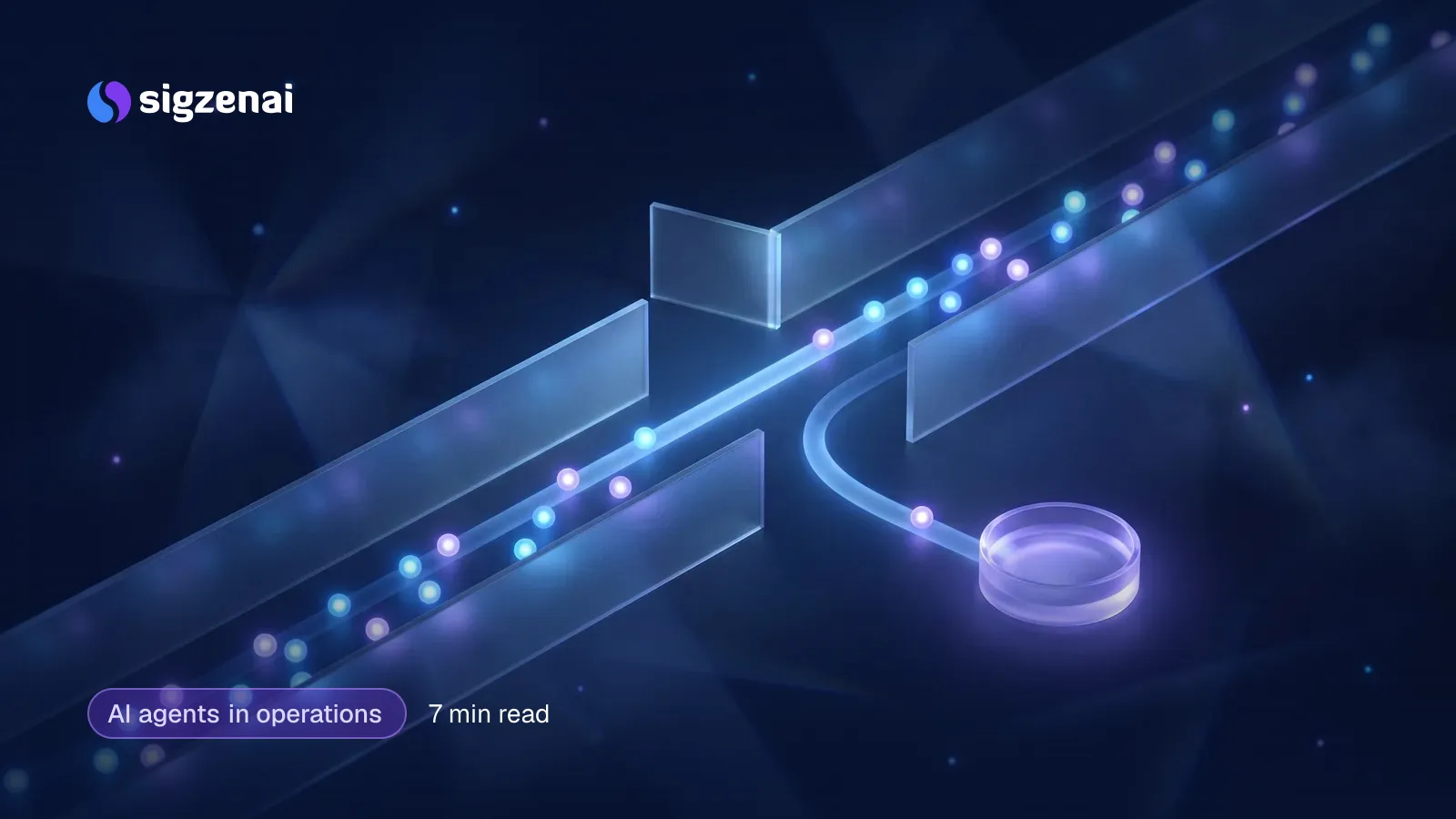
Scope it so that every answer comes from your own order data and every other request goes to a person. That keeps the agent useful, keeps it on the permitted side of the policy and keeps its mistakes small.
A where-is-my-order agent on WhatsApp
- Customer asks
- Verify the customer
- Look up the order
- Answer from carrier and ERP data
- Hand over if outside scope
What the agent does
- Confirms who the customer is, using the phone number on the order plus one more check, such as the order number or postcode.
- Reads the order, shipment and carrier tracking from your ERP or commerce platform.
- Gives the status, the expected delivery date and the tracking link, in plain words.
- Answers a short list of related questions you approve: change of delivery address before dispatch, how to start a return, where an invoice is.
What the agent refuses
It refuses anything outside your orders and your published policies. It does not chat about the weather, write poems or answer general product research questions. A narrow refusal is a design choice, and it also keeps the agent clearly a customer-service tool under the new terms.
Escalation to a person
Hand over whenever the customer asks for a person, the order data is missing or contradictory, the parcel is late beyond your threshold, or the message mentions a complaint, damage or a refund. The person should see the whole conversation and the order record. Our escalation design for AI support agents covers the triggers and the hand-over in detail.
Opt-out and consent
Let the customer stop messages with one word, and honour it across every channel. Proactive updates, such as "your parcel is out for delivery", should go only to customers who agreed to receive them. Meta sets its own rules for business-initiated messages and templates, so check the current WhatsApp Business messaging policy before launch.
What to check before launch
Check four things before switching it on: scope, verification, hand-over routing and the opt-out. The agent must not answer outside its scope, and verification must block a stranger from seeing an order. Every hand-over must reach a named team, and the opt-out must work.
Test it with real past questions, including the awkward ones. Count how often it answers correctly from data, how often it hands over, and how often it should have handed over but did not. That last number is the one to drive towards zero before launch.
How do you know it is working?
Measure it against the queue it replaces. Before launch, count order-status contacts a week by channel and the time each one takes. After launch, track the same counts, plus the share the agent resolved without a hand-over and the share of hand-overs that a person had to fix.
Read a sample of conversations every week for the first month. Look for answers that were correct but unhelpful, such as a status code a customer cannot read, and for hand-overs that came too late. Small wording fixes in the first weeks usually matter more than model changes.
Set a stop rule as well. If the agent gives a wrong delivery date more than rarely, pause proactive updates until the data feed is fixed. A wrong promise costs more goodwill than a slow but accurate reply from a person.
Our view: build on the system of record, not around it. An agent that reads orders from your ERP and writes nothing back is the safest first version. Our AI automation page sets out how we build agents on the systems a business already runs.
Sources
- TechCrunch, WhatsApp changes its terms to bar general-purpose chatbots from its platform (Oct 2025)
- TechCrunch, EU investigating Meta over policy change that bans rival AI chatbots from WhatsApp (Dec 2025)
- Gartner, survey of 3,566 B2B and B2C customers, Feb–Mar 2026: third-party GenAI vs company chatbots; geography not stated (Jul 2026)
- European Commission, press remarks by Executive Vice-President Ribera on interim measures on Meta and WhatsApp (Jun 2026)